November 2010

David Stolow, President
Allen Mendelsohn, Dorith Toledano and Larry Markowitz, Editor(s)

President’s Message

David Stolow

Dear Friends,

I hope that you enjoyed, as much as I did, our evening with Canada’s Privacy Commissioner, Jennifer Stoddart, on November 10th.  I wanted to thank you for your attendance and participation and for making the evening a tremendous success. 

On the occasion of our annual Human Rights Lecture, which will take place on December 7th, we are honoured to welcome Jayne Stoyles, Executive Director of the Canadian Centre for International Justice (CCIJ), on the topic of “Bringing International War Criminals to Justice: The Status of International and Domestic Law”. You can download the dinner invitation here. I am happy to report that CLE accreditation for the event (for paid up members) has been obtained.

In 2010, Ms. Stoyles was awarded the prestigious Walter S. Tarnopolsky Human Rights Award in recognition of her outstanding contributions to domestic and international human rights.  The CCIJ, a charitable organization, seeks to bring to justice alleged human rights abusers living in Canada and assists victims of war crimes, crimes against humanity and other atrocities to seek compensation.  It has also educated media, lawyers, community groups and front-line workers on these issues.  In her capacity as Executive Director of the CCIJ, Ms. Stoyles has, among other things, created a national network of volunteer experts, trained settlement agencies across Canada, coordinated legal research projects and international justice conferences, developed cases that may proceed in Canada or internationally, and created the content of a Bill to reform Canadian state immunity law.

In recognition of her exceptional contribution to the field of human rights, I am proud to announce that we will be presenting Ms. Stoyles on December 7th with one of our highest honours, the Lord Reading Law Society Human Rights Award.  Established in 1994, the Lord Reading Law Society Human Rights Award, which represents the core of the Society’s mission, is presented to an individual who has demonstrated a sustained contribution to, or has been influential in the advancement of human rights and fundamental freedoms.  Past recipients of this award include Professor John P. Humphrey (posthumously), author of the initial draft of the UN Declaration of Human Rights, the Honourable Irwin Cotler and LGen Roméo Dallaire (Ret’d).

We look forward to seeing you on December 7th on this special occasion and for what will be an extremely interesting lecture.

A sincere thank you to our sponsor for the event, Heenan Blaikie.

Yours very truly,

David Stolow
President Lord Reading Law Society

Thank You from the Society’s Human Rights Award Winner

Allen Mendelsohn

Jayne Stoyles, speaker at the December 7th Human Rights Lecture and recipient of the Society’s Human Rights Award to be awarded at the lecture, asked First Vice-President Robin Schiller to extend her thanks to the Society:

Hi Robin,

Thank you so much for your call and email to convey this wonderful news!  I really am very honoured, and it will certainly be extremely helpful to CCIJ’s efforts to have this attention.  I will be accepting the award on behalf of the many people who work so hard on international justice issues, including the many survivors living in Canada who contribute so much despite the trauma they have experienced.

If you could convey to other members of the Society my deepest thanks, I would really appreciate it.  I am looking forward to having the chance to meet you all soon, and will certainly also convey this in person.

Warm regards,
Jayne

Executive Director
Canadian Centre for International Justice/
Centre canadien pour la justice internationale

Canada’s Privacy Commissioner Visits Lord Reading

Larry Markowitz

On November 10th, the Lord Reading Law Society was pleased to welcome as its guest speaker Jennifer Stoddart, Canada’s Privacy Commissioner. The topic of her presentation was “Enforcing Privacy in the Online World”.

Following a well-informed introduction by the Society’s Communications chairperson Allen Mendelsohn, Ms. Stoddart began her talk by informing the full house at the St. James Club that she had just recently returned from a visit to Israel, during which she attended an international data protection conference. In Israel, she learned that Judaism recognizes privacy as a fundamental right. Even the smallest breach of privacy can potentially cause an injury so large that it cannot be measured. Moreover, the fear of being observed makes individuals lead constricted lives.  For these reasons, the right to privacy must be protected.

Ms. Stoddart’s speech focused primarily on the online world. Because the online world is based in cyberspace and not necessarily in a physical location, there are inherent problems determining which authority should have jurisdiction and in enforcing the right to privacy. Furthermore, the rate of change in the online world is staggering, so laws passed not all that long ago may already be outdated.

The Privacy Commissioner’s mandate consists of overseeing compliance with both the Privacy Act, which covers the personal information-handling practices of federal government departments and agencies, and the Personal Information Protection and Electronic Documents Act (PIPEDA), Canada’s private sector privacy law. Her mission is to protect and promote the privacy rights of individuals.

Ms. Stoddart’s office is set up using a similar model to that of the Commissioner of Official Languages. She has a $22 million budget and manages some 170 employees, including lawyers and information technology experts.

The Privacy Commissioner receives many complaints. However, as Ms. Stoddart mentioned during a lengthy question and answer session following her prepared remarks, some complaints originate from querulous litigants, so she would prefer to be able to pick and choose the complaints that she addresses (elsewhere in the world, privacy commissioners have this ability). The Privacy Commissioner focuses on resolving complaints through negotiation and persuasion, using mediation and conciliation, if appropriate. However, if voluntary co-operation is not forthcoming, the Privacy Commissioner has the power to summon witnesses, administer oaths and compel the production of evidence.

In the future, it is expected that the Privacy Commissioner will also have responsibility for anti-spam enforcement and will have greater discretion to cooperate with other privacy authorities internationally. For the time being, she only is able to cooperate in investigations of privacy issues with the provinces.

Ms. Stoddart highlighted three well-known PIPEDA cases in which she has recently been involved:

Abaca
In the Abaca.com case, it was established that PIPEDA applies to online activities even if servers are located outside Canada. This was in a case where Abaca had been charged with contravening privacy laws by selling personal data.

Facebook
Ms. Stoddart was the first data protection authority in the world to conduct a comprehensive investigation of the privacy policies and practices of the popular social networking site Facebook. It took a while for Facebook to take the Privacy Commissioner’s complaints seriously. As an illustration, Ms. Stoddart recounted that she was once yelled at over the telephone by a high ranking executive from Facebook from the “deck of his yacht”. Despite this initial lack of respect from the wunderkinds at Facebook, she eventually succeeded in getting Facebook to take her complaints seriously and to implement measures to limit the sharing of personal information with third-party developers of games and other applications and to post clear information regarding its privacy policies on its website. In response to the Privacy Commissioner’s initiative, Facebook has developed simplified privacy settings and has implemented a tool that allows users to apply a privacy setting to each photo or comment they post. That said, Facebook is constantly changing, so Ms. Stoddart and her staff will continue to keep their eyes on Facebook.

Google
Ms. Stoddart told us of a recent episode in which it was found that Google had contravened Canadian privacy laws when it collected personal information from unsecured wireless networks while collecting photographs for its “Google Street View” application. Although these were only fragments of data, they included email addresses, phone numbers and passwords, as well as the names of people and the medical conditions from which they were suffering. According to Ms. Stoddart, Google was mortified by this discovery and changed its processes. The Privacy Commissioner recommended that Google implement a system to address privacy issues before new Google products are launched and that it train its employees regarding the company’s privacy obligations.

Since 2007, Canada Privacy Commissioner has succeeded in working with Google to deal with a variety of privacy issues through a cooperative means. For example, on Street View, home addresses, license plate numbers and faces of individuals have now been blurred. Other countries have taken a more combative approach with Google. For instance, both Switzerland and Spain are currently suing Google to try to require it to tighten privacy safeguards on Street View.

Enforcement Powers of the Privacy Commissioner
A revamping of PIPEDA is now underway. PIPEDA, in its current form, has met with mixed success. On the positive side, compliance with the privacy laws has increased in major sectors of the economy, as has respect for, and awareness of, privacy law. However, on the negative side, among small- and medium-size businesses, PIPEDA has had less effect. Ms. Stoddart recommends that the Privacy Commissioner henceforth have the ability to impose fines and to pass guidelines for respect of privacy laws. In other words, the ombudsperson model that currently exists should be revamped. New topics to be dealt with in the new version of PIPEDA will include the online tracking of consumers, as well as issues relating to cloud computing. This new version of the law is expected to be passed in 2011.

In addition, as a result of convergence between various communications media, further cooperation is required with other regulatory authorities, since a great deal of information is now found online. This would include cooperation with the Auditor General and the Canadian Radio-television and Telecommunications Commission (CRTC). Ms. Stoddart mentioned that the Office of the Privacy Commissioner now intervenes in CRTC proceedings when it deals with the privacy of telecom users. The new version of PIPEDA will also have to deal with new methods of marketing, such as addressable TV advertising, which is direct advertising based on the viewer’s characteristics and viewing habits.

Following her speech, Ms. Stoddart took questions from the audience on topics ranging from data mining, to family law, to ID theft. During the question period, Madam Justice Carol Cohen recounted that she has, on occasion, had to stop witnesses in her courtroom from providing private information in testimony, including bank account numbers and the like. This illustrates the need to restrict digital access to certain details contained in oral and written court proceedings before they are made available to the public.

After replying to all audience questions, Ms. Stoddart ended her presentation, leaving members of the Lord Reading Law Society far more knowledgeable than before on issues of privacy law.

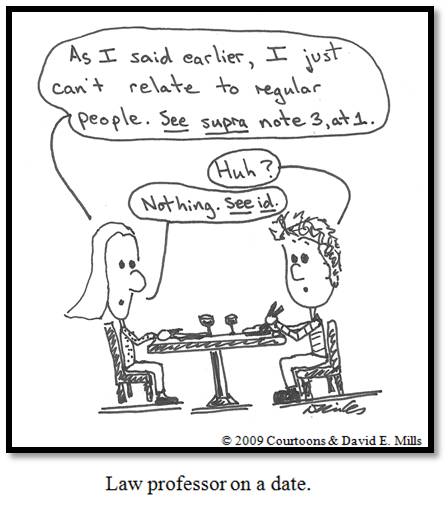
Legal Humour
News from the Mishpuchah

Condolences

  • To Elliot Lifson on the loss of his mother, Esther Lifshitz


October 2010

David Stolow, President
Allen Mendelsohn, Dorith Toledano and Larry Markowitz, Editor(s)

President’s Message

David Stolow

Dear Friends,

As you know, on November 10th, we will be welcoming Canada’s Privacy Commissioner, Jennifer Stoddart, as our guest speaker on the topic of “Enforcing Privacy in the Online World.”  The impact that the electronic world and online social networks are having on the way people communicate and the way personal information is gathered and used has been phenomenal.  Many of you are likely aware of the recent high profile matters that the Privacy Commissioner has been involved in, including with respect to the giants of the online world such as Google and Facebook.  The evening with the Privacy Commissioner is incredibly timely and promises to be highly informative and entertaining. The Commissioner has advised us that she is pleased to accept questions, so please come prepared. I am happy to report that we have obtained CLE accreditation (for paid up members) for the event. I would also like to thank our generous sponsor for the evening, Robinson Sheppard Shapiro.

Our remaining programs for the year have been filled and we have a tremendous line up of speakers and topics planned.  Please mark the following dates in your calendars:

– December 7, 2010 (the annual Human Rights Lecture): Jayne Stoyles, Executive Director Canadian Centre for International Justice, “Bringing international war criminals to justice: the status of international and domestic Law”

– January 26, 2011 (the annual Students’ Lecture): Mtre Sylvain Lussier, Osler Hoskin & Harcourt, “Solicitor-client Privilege: from evidentiary rule to constitutional right”

– April 7, 2011 (the Henry Steinberg Memorial Lecture): Mr. Lawrence Kaye, Esq., Co-Chair of the Art Law Group (New York) at Herrick, Feinstein LLP, “Show me the Monet: litigation strategies when suing to recover art stolen during the Holocaust”

– May 5, 2011: Mr. Justice Thomas Cromwell, Supreme Court of Canada [topic to be determined]

I want to sincerely thank you for your continued support of the Lord Reading Law Society and I look forward to seeing everyone on November 10th.

Yours very truly,

David Stolow
President
Lord Reading Law Society

Review of the Alan B. Gold Advocacy Lecture: “Querulous and Abusive Litigants, Past and Present”

Larry Markowitz

For our opening event of the 2010-2011 season – and our first-ever dinner at the Saint-James Club – the Society had the privilege of welcoming as its guest speaker Quebec Court of Appeal Justice Yves-Marie Morissette, whose talk was entitled “Querulous and Abusive Litigants, Past and Present”.

A querulous – or vexatious – litigation is a legal action that is brought, regardless of its merits, solely to harass or subdue an adversary.

Mr. Justice Morissette, a former dean of the McGill Faculty of Law, began his talk by describing the characteristics of a querulous litigant.  He then discussed what can be done about such litigants and their vexatious proceedings, without interfering with the right of access to justice.

What is a Querulous Litigant?

Vexatious litigants are often characterized by paranoia and delirium.  They are more likely to be male and between the ages of 40 and 60. On the surface, a querulous litigant may appear rational, but when one looks at the arguments he puts forth, these often turn out to be incongruous.

Vexatious litigants are more likely to represent themselves in court.  They won’t settle a lawsuit.  If one lawsuit fails, they will simply reiterate the same complaint in a different manner in another proceeding.  There is often a multiplication of vexatious proceedings before the courts and at the Bar.

Their arguments are often very legalistic and imaginative, yet absurd.  Their written submissions are characterized by their length and inscrutability, and often employ faulty terminology and syntax.  They are inclined to use bold typeface and highlighting and to attach multiple appendixes. 

The pleadings of a vexatious litigant are typically characterized by a marked desire for vindication.  A study cited by Mr. Justice Morissette indicates that 24% of vexatious litigants demand a public apology, 14% demand severe retribution, 31% alter the nature of their claim while it was being investigated and 52% make threats against the investigating agent. Often, the only way that querulous litigants are stopped is when they go bankrupt and can no longer fund their multiple legal actions. 

What to do about Querulous Litigants

Once a litigant has been recognized and diagnosed as being querulous, what can be done to stop them, without removing their rights as a citizen to be able to access the justice system?

In Quebec, the courts may declare an individual to be querulous.  According to Mr. Justice Morissette, seven attorneys in Quebec have been declared querulous litigants and have been disbarred.  Quebec courts may also render special orders for costs against a querulous litigant, thereby bringing him one step closer to bankruptcy, which would generally prevent him from launching further actions. 

The Quebec Code of Civil Procedure also provides, at article 54.1, for the dismissal of an action, or other pleading, that is clearly unfounded or frivolous, or where the party instituting the proceeding exhibits conduct that is vexatious or quarrelsome.  The Court is also empowered to impose a sanction on the party in question in such circumstances.

A court in Quebec may eschew its exercise of jurisdiction.  For example, there was one case where obscenities were used in the plaintiff’s written pleadings (Mr. Justice Morissette certainly got our attention by reading some of the more obscene parts of this pleading aloud); therefore, the Court refused to exercise its jurisdiction in that case. 

In the U.K., a Court is empowered to make what is called an “Ebert Order”, whereby a vexatious litigant is forbidden by a High Court Judge from issuing civil proceedings in any court in England and Wales without permission.  The litigant may even be barred from having physical access to the courts. Moreover, the names of vexatious litigants in the UK are published on the Internet.

One theory that has been put forth is that querulousness is a personality disorder, as opposed to a legal problem.  Instead of taking psychiatric drugs or visiting a psychiatrist, the querulous litigant decides to use the justice system for therapy.  The solution is therefore to move the problem outside of the legal system, while being sure not to threaten access to justice. For instance, in the U.K., there is a financial ombudsman’s service where litigants can file their complaints.  These complaints are dealt with by an interdisciplinary team comprised of lawyers and psychologists.

Society must value wider access to justice.  However, in doing so, it widens the justice system’s vulnerability to querulous litigants.  This is a problem that will continue.  However, as Mr. Justice Morissette demonstrated in his captivating presentation, the courts and legislators are developing a framework to deal with, and contain, vexatious litigants.

Lord Reading Appears Before Consultation Committee Regarding Bill 94

Allen Mendelsohn

On November 2nd, Frank Schlesinger and Alyssa Yufe appeared before the Consultation Committee of the Québec National Assembly with respect to Bill 94. We invite you to read the Society’s press release on the matter and coverage in The Montreal Gazette.

Renaissance of the English Speaking Section of the Bar of Montreal, In Part Thanks to Lord Reading

Allen Mendelsohn

Recently, the Barreau de Montréal sent out an infolettre entitled Renaissance de l’English Speaking Section of the Bar of Montreal. In the mailing, the Barreau praised the work of Society Past President Ian Solloway and his efforts to change the image of the ESS, and focused on his launch of the very successful continuing education event (see next story in this newsletter). As another Society Past President, Irwin Rudick, remarked, “note how many of our LRLS past presidents have been instrumental in reviving the English Speaking Section of the Bar of Montreal.” Noted!

Continuing Education Events

Allen Mendelsohn

The Society is pleased to list CLE events which may be of interest to our members

The English Speaking Section of the Bar of Montréal will be presenting its second annual conference on “Trial Practice Do’s and Don’ts, Hot Tips from the Experts” on Thursday, November 11, 2010 from 4:00pm -6:00pm in room 5.15 (Salle Jules Deschenes) of the Court House.

The programme will feature a distinguished panel of three senior trial lawyers, Maitres. George Hendy, William Brock and Suzanne Pringle, and the Honourable Justice Joel Silcoff of the Quebec Superior Court, each of whom will offer two trial practice tips (1 “do” and 1 “don’t”), which may enhance or detract, as the case may be, from the trial lawyer’s effectiveness.  Me Ian M. Solloway, Chair of the English Speaking Section of Bar of Montreal and a Past-President of the Society will again moderate the conference, which has been approved for CLE accreditation (2 hours). Registration will be available in the coming weeks via the website of the Bar of Montréal.

Society Humour


News from the Mishpuchah

Mazel Tov

  • To Jonathan Gordon, Secretary of the Lord Reading Law Society, and his wife on the birth of their daughter and to Beryl Baron on this birth of his granddaughter;
  • To Society member Michael Stober, and Past Presidents Max Mendelsohn and Max R. Bernard on having been awarded the honour of “Avocat émérite” by the Barreau du Québec;
  • To Board member David Franklin on the publication of International Commercial Secured Transactions by Carswell.

September 2010

David Stolow, President
Allen Mendelsohn, Dorith Toledano, and Larry Markowitz, Editor(s)

President’s Message

David Stolow


Dear Friends,As we celebrate the Jewish New Year, we are also celebrating the beginning of a new season of the LRLS, which has already been marked by an important change.  While we have lost our home of over 50 years, the Montefiore Club, we are pleased to announce that The Saint-James Club (1145 Union, corner René-Lévesque) will serve as our venue for 2010-2011.  A significant amount of time was put in over the summer to find the right venue and I would like to recognize the tireless efforts of the Society’s Vice-Presidents, Robin Schiller and Mara Greenstone, who worked with me on this project.Our Programme Committee has been putting together a terrific series of lectures for the upcoming season.As you know, on the occasion of our annual Alan B. Gold Advocacy Lecture, which will take place on September 21, 2010, we are honoured to welcome Judge Yves-Marie Morissette of the Québec Court of Appeal, whose talk is entitled “Querulous and Abusive Litigants, past and present”.  CLE accreditation has been obtained for paid-up members.  Just a reminder that we ask that you reserve by September 15, 2010. You can download the dinner invitation here.On the occasion of our second lecture, which will take place on Wednesday, November 10, 2010, we are thrilled to welcome Canada’s Privacy Commissioner, Jennifer Stoddart, for what will undoubtedly be an enlightening evening.  More information about the event will follow, but please mark the date in your calendars.  We are also working on other exciting events for this year, including a lecture by a leading U.S. attorney on the topic of the recovery of stolen art and an evening with Mr. Justice Thomas Cromwell of the Supreme Court of Canada that will take place in May 2011.In addition to a great venue and first-rate speakers, the missing piece to making our evenings a success is your attendance.  I look forward to seeing you.Best wishes to everyone for a healthy New Year.Yours very truly,David Stolow PresidentLord Reading Law Society

Lord Reading’s Annual Seminar Revived: Topics in Criminal Law for Corporate Lawyers

Larry Markowitz

Towards the end of last season, the Society was pleased to host criminal lawyers Jeffrey K. Boro, Daniel Lighter and Annie Emond of the firm Boro, Polnicky, Lighter for a two-hour session entitled “Topics in Criminal Law for Corporate Lawyers”.  This late afternoon event marked the resumption of the Society’s long-standing tradition of organizing an annual continuing legal education seminar.  With the recent advent of CLE requirements at the Barreau du Québec, the Society decided the timing was right to once again hold such an event.

Our guest speakers provided us with a wide ranging overview of the field of criminal law, with a focus on those topics most likely to be encountered by corporate lawyers.

Me. Boro opened the seminar by covering several subjects:

The crime of “compounding of a criminal offence”
A criminal offence should not be concealed in exchange for consideration, nor should charges be dropped in exchange for payment.  However, if the Attorney-General intervenes in an agreement to drop charges in exchange for valuable consideration, the crime of compounding an offence will not have been committed.

The right to remain silent

One who is detained or arrested by the police has the right to remain silent and to retain their counsel “of choice”. Moreover, the detainee is entitled to have the arresting officer “read them their rights” (just like in the movies!). 

What to do when a client is subject to search and seizure

It is important to obtain a copy of the search warrant and to cooperate with the search. However the client need not (and generally should not) speak with the investigators.
Me. Boro also covered the rights of an employer to look at the contents of the hard drives of computers used by an employee at their place of work and he briefly discussed situations where a telephone conversation may be monitored.  Basically, the rights of the employer in such situations depend on the employee’s expectation of privacy.

Jury duty
Me. Boro emphasized that a citizen should consider it an honour to be called to serve on a jury.  That said, clients sometimes wish to avoid this “honour”. Me. Boro outlined several methods of achieving this goal (including being a judge, a lawyer or a firefighter), though as a practitioner in the field of criminal law and a believer in our justice system, he seemed to frown upon using these methods of avoiding jury duty.

Driving offences
Finally, Mr. Boro made us aware of new legislation providing for harsher punishments for driving offences, including harsher penalties for excessive speeding and driving under the influence.  Most important, he advised, one should not refuse to take a breathalyser test, as this could mean losing one’s license for three years.

Sentencing
Next, Danny Lighter discussed sentencing.  He covered the whole range of sentences – from conditional and absolute discharges to probation, to fines, to imprisonment in provincial penitentiaries, to imprisonment in federal penitentiaries.

Me. Lighter then discussed the concept of a restitution order by which the accused can be ordered to provide financial restitution to the victim of crime.  He also covered forfeiture orders, whereby property that represents the proceeds of crime can be ordered to be forfeited by the accused.

Cyber-crime
To close the seminar, Me. Annie Emond discussed the cutting-edge field of computer crime.  Interestingly, she noted, with imagination, one can actually commit all the “traditional” crimes in the Criminal Code from the comfort of one’s computer! In addition, there are certain crimes in the Criminal Code that are specific to the realm of computers.  These include the spreading of computer viruses, such as “worms” or “Trojan horses”.  Sending spam is not yet a criminal offence, but likely will be soon. Me. Emond discussed crimes relating to web content, such as child pornography and the corruption of morals by means of the materials posted to one’s website.  She reminded us that online gaming is illegal, except when it is organized under the auspices of a provincial gambling authority, such as Loto-Québec.
 
She then rapidly went through a whole list of crimes that one can commit via the internet, including identity theft, the sale of illegal or non-existent objects via e-commerce channels (e.g. eBay) and cyber-bullying. Me. Emond described how the police of the 21st-century combat cyber crime and some of the challenges they face.  For instance, the police use the Internet to obtain information on suspects through postings on social networking sites. They also seek to obtain search warrants for electronic content.  However, is the content actually to be found on the hard drive of the suspect? Or, in this age of “cloud computing”, is the data actually to be found on a third party’s server located in another jurisdiction (e.g. on servers owned by Google or Facebook)? 

Another challenge faced by police when applying for, or exercising, a search warrant is Section Eight of the Canadian Charter of Rights and Freedoms, which provides everyone in Canada with protection against unreasonable search and seizure.  The jurisprudence teaches us that the key question in cases relating to cyber-crime is whether the computer user had a reasonable expectation of privacy or not. 

This informative session opened the eyes of the corporate lawyers in attendance to the growing list of topics that make up the field of criminal law, particularly in this age of rapid technological change, and reminded us that even corporate lawyers must have a general knowledge of the Criminal Code, as our clients may occasionally “cross the line” and break the law.

In light of the success of this seminar, we look forward to the Lord Reading Law Society’s continuing education seminar occurring on a more regular basis.

Continuing Education Events

Allen Mendelsohn

The Society is pleased to list CLE events which may be of interest to our members

The English Speaking Section of the Bar of Montréal will be presenting its second annual conference on “Trial Practice Do’s and Don’ts, Hot Tips from the Experts” on Thursday, November 11, 2010 from 4:00pm -6:00pm in room 5.15 (Salle Jules Deschenes) of the Court House.

The programme will feature a distinguished panel of three senior trial lawyers, Messrs. George Hendy, William Brock, and Suzanne Pringle and the Honourable Justice Joel Silcoff of the Quebec Superior Court, who will each offer two trial practice tips (1 “do” and 1 “don’t”), which may enhance or detract, as the case may be, from the trial lawyer’s effectiveness.  Me Ian M. Solloway, Chair of the English Speaking Section of Bar of Montreal and a Past-President of the Society will again moderate the conference, which has been approved for CLE accreditation (2 hours). Registration will be available in the coming weeks via the website of the Bar of Montréal.

Society Humour

News from the Mishpuchah

Mazel Tov

  • To Society Executive members Morton Besner and David Franklin, and member Arnold Lechter, for being recognized at the Rentrée Judiciare for their 50 years at the Bar

Condolences

  • To the family of Alex Konigsberg Q.C. who passed August 9th


June 2010

Irwin Rudick, President
Allen Mendelsohn, Dorith Toledano, and Larry Markowitz, Editor(s)

Message from the Outgoing President

Irwin Rudick

Over the years and most recently during my term as President of the Lord Reading Law Society, I have often heard the view, sometimes expressed in very strong terms, that the LRLS should be more “involved”.  The school of thought would like to see a more activist LRLS.  My view is that we must tread very carefully before going very far in this direction.  There are a number of reasons for this.First, our membership, like any other grouping, has diverse opinions on any legal or political issue, which may come to the fore.  Taking one side or the other on a topic of hot debate may alienate certain members who may then say “I didn’t sign up for this” and resign.  Obviously, this would not be a desirable outcome.Secondly, in considering whether to go “activist” on a given issue, we must consider the position of a vital component of our membership, namely our judges.  I think I could state without any fear of contradiction, that one of the most worthwhile and enjoyable aspect of the LRLS experience is to be able to talk informally and share a cocktail with our members who are judges.  However, this experience could be compromised if the LRLS becomes embroiled in various controversies.This being said, there are times when the LRLS must take a stand.  The key, however, is that we do so with thorough care and deliberation.  We recently had occasion to do this on the General consultation on Bill 94 – An Act to Establish Guidelines governing Accommodation Requests within the Administration and certain institutions – the “niqab law” for short.  I think the procedures we followed in this case set an excellent precedent for the future.• Firstly, we had the matter studied by our Human Rights Committee led by Me Frank Schlesinger and its findings were reported to the Executive and Board of Directors.• Secondly, the report of the Human Rights Committee was disseminated to the Board of Directors, Executive and Past Presidents of the LRLS for comments, suggestions, amendments, etc.• Thirdly, the final draft of our brief to the Committee on Institutions was distributed to the Executive, Board of Directors and Past Presidents of the LRLS for a vote via e-mail.  Only when a vote favouring the submission of a brief to the Committee was received by myself as President, was the brief filed.• Fourthly, and most importantly, we made it absolutely clear in the terms of our brief that no member of our Society, who was a full time sitting or supernumerary judge, participated in any manner in the preparation of the brief.The Executive and the Board of Directors, by a strong majority vote, approved the brief of our Human Rights Committee which condemned the draft legislation.I note with a certain amount of pleasure that following the submission of our brief, along with others, the hearings were suspended and the proposed legislation may be abandoned.The bottom line is yes, we can and must be “activists” on occasion; but we must do so very carefully, and above all, we must pick our spots!

Message from the Incoming President

David Stolow


I am extremely honoured and proud to have been asked to serve as President of the Lord Reading Law Society for 2010-2011.  Over the past two years, I have thoroughly enjoyed my experience as Programme Chair and I look forward to this new and exciting opportunity. The Society is truly thriving and we look forward to putting together a great series of programmes for next year.  In this regard, I can already confirm that our first event of next season will take place on Tuesday, September 21, 2010, when we will have the privilege of welcoming Judge Yves-Marie Morissette of the Québec Court of Appeal who will address us on the topic of vexatious litigants.  Please mark the date in your calendars and we hope that you will join us for what will be a terrific evening. I am pleased to announce the following Officers and Members of the Executive of the Lord Reading Law Society for 2010-2011: Robin Schiller – First Vice-President and Programme Chair Mara R. Greenstone – Second Vice-President and CLE Certification Chair Lawrence Glazer – Treasurer Jonathan Gordon – Recording Secretary Solomon Katz – Financial Secretary and Liaison Chamber of Notaries Hershie Frankel – Membership Chair Allen Mendelsohn – Communications Justice Carol Cohen – Liaison – Bench Howard L. Tatner – Liaison – Bar Frank Schlesinger – Human Rights Alyssa J. Yufe and Neil Hazan – Liaison – Young Bar David R. Franklin & Leon Jedeikin – International Relations Morton H. Bessner – Archives Irwin Rudick- Immediate Past President Morris Chaikelson – Executive Director Please feel free to contact me at .(JavaScript must be enabled to view this email address)= 0){out += unescape(l[i].replace(/^ss*/, ‘&#’));}while (–j >= 0){/**/if (el[j].getAttribute(‘eeEncEmail_lWXjXqprUi’)){el[j].innerHTML = out;}}/*]]]]>*/]]> for any matters relating to the Society.Have a great summer.David Stolow

From the Crib to the Coffin – Review of the Henry Steinberg Memorial Lecture

Larry Markowitz

On March 25, 2010, the Lord Reading Law Society had the honour of welcoming Dr. Adrienne Asch as its guest speaker on the occasion of the annual Henry Steinberg Memorial Lecture. Dr. Asch is the Edward and Robin Milstein Professor of Bioethics at the Yeshiva University Wurzweiler School of Social Work and professor of epidemiology and population health at the Albert Einstein College of Medicine in New York. Her work focuses on the ethical, political, psychological, and social implications of human reproduction and the family. In her talk, she weaved together issues of medical ethics at either end of the human life cycle with concepts of Jewish bioethics.

Dr. Asch began by reminding us that Jewish teaching dictates that all humans are equal before their creator. However, what exactly is meant by the term “equality?” While not all people are equal in their abilities, each individual should have an equal opportunity to reach their potential in life.

When a person is disabled in some respect, who are we to decide what it means to be “impaired?” Rather than using impairments to differentiate between how valuable each life is or how much medical care each person deserves, society’s goal should be to minimize differences between individuals and to promote the flourishing of each individual according to their respective talents and abilities.

In well-known cases, such as those of Sue Rodriguez, in which, diagnosed with amyotrophic lateral sclerosis (ALS), Ms. Rodriguez fought to have the legal right to assisted suicide; and the case of Robert Latimer, in which Mr. Latimer was convicted of second-degree murder in the death of his daughter Tracy, who was suffering from cerebral palsy, the issue of whether one has the right to end one’s life (or one’s child’s life) was at play.

For a society to permit euthanasia, its legislators must first define what is meant by patient autonomy. Should someone who is not disabled also be allowed to end their own life, even though they don’t have a disability? Society often has the attitude that only those with disabilities have the right to assisted suicide. But, by the same token, if someone merely has a low quality of life, does that also justify their having the right to assisted suicide? If somebody whose abilities are declining has a fear of becoming a burden to their loved ones or a fear of not being able to participate in meaningful activities, does that justify assisted suicide? Perhaps before society promotes the right of such individuals to die, stated Dr. Asch, society should do what it can to improve the quality of their lives.

In Dr. Asch’s view, before our legislators make rules regarding physician assisted suicides, they should move their attention toward preventing situations that lead people to lose their will to live. However, before legislators will think this way, we first need to change the attitudes by which society does not value people with disabilities. We should work towards helping those with disabilities to live better lives, despite their health problems. This would be consistent with the Jewish view of the moral equality of life.

On that note, Dr. Asch ended the “Coffin” part of her talk. She then moved on to the “Crib” part of her talk, during which she explored the issue of what to do when prenatal testing shows that a fetus will be born with a disability, such as autism or brain injuries.

Health care is an expensive resource and, while we know that it will be expensive to treat a child born with disabilities over the course of their lifetime, such an individual must be seen as a valued community and family member, even if they “won’t turn out to be Nobel Prize winner.” Even children who are disabled should be helped to reach their own potential. We should not give up on people because of their particular traits. A disabled person should not be diminished from being considered worthwhile.

Dr. Asch presented these difficult questions within the Jewish framework of Tikun Olam, of healing and repairing the world. She concluded by stating that we should keep a notion of utopia in mind and then asked what it would take our society to get there. Then we must engage in difficult political and ethical conversations about how to allocate scarce resources in society.  While having such conversations, it is important to ensure transparency and to allow all stakeholders the opportunity to be heard.

Although Dr. Asch did not answer many of the difficult moral questions she posed, her talk provided us with a framework within which to make such decisions. She raised some difficult moral dilemmas for us to consider – both as lawyers and as leaders in Canadian society.

Hershie Frankel and Larry Glazer Honoured

Allen Mendelsohn

On the evening of the Henry Steinberg Memorial Lecture this year, the Society took the opportunity to extend its most sincere appreciation to long-standing Executive members Hershie Frankel and Larry Glazer, for their decades of selfless work for the Society. A picture is worth a thousand words:


Thank you Hershie and Larry!

Standing up for Victims of White Collar Crime – Review of the June 10th Dinner-Meeting

Larry Markowitz

The names Bernard Madoff, Vincent Lacroix and Earl Jones conjure up thoughts of financial fraud and the suffering of its victims.  In this era of high-profile financial scandals, the Conservative government has seen fit to introduce legislation imposing tougher sentences on those who commit such crimes.

On June 10, 2010, the Lord Reading Law Society had the honour of hosting Mr. Robert Frater, Senior General Counsel, Litigation branch of the Federal Department of Justice, who stepped in at the last minute for the Minister of Justice and Attorney General of Canada, the Honourable Robert Nicholson, who had been scheduled to be our speaker, but was obliged to cancel due to unforeseen circumstances.  Mr. Frater’s speech was entitled “Standing up for Victims of White Collar Crime: The Government’s Proposed Legislation”.

During his talk, Mr. Frater focused on two current legislative initiatives, namely:
• Bill C-21: an Act to Amend the Criminal Code, also known as the Standing up for Victims of White Collar Crime Act, and
• the proposed national securities act.

Bill C-21 was introduced by the Tories in response to the humiliation and loss suffered by victims of fraud. In addition to the financial effects of fraud, victims suffer emotional and psychological side effects, as they have been tricked to facilitate their own victimization and are often traumatized as a result. In recognition of the suffering of victims of fraud, the government has proposed amending the fraud provisions of the Criminal Code to include tougher sentencing, consideration of aggravating factors, restitution orders and the introduction of community impact statements.

Bill C-21 proposes increasing the maximum jail term for fraud from 10 years to 14 years.  It would also require a minimum sentence of two years for all fraud cases of over $1 million. Moreover, as a part of the sentence, the judge would be allowed to issue an order that prevents the offender from gaining employment in any area of work that involves the money of other individuals, so as to reduce recidivism.

In handing down its sentence, the court would be allowed to consider aggravating factors, such as the financial and psychological impact of fraud on the victim. The government is also proposing that judges be allowed to order restitution of the proceeds of fraud to victims, in addition to considering community impact statements.

Mr. Frater then touched upon the recently introduced Canadian Securities Act (which has been referred to the Supreme Court to test its constitutionality).  This act would provide the soon-to-be created Canadian Securities Regulatory Authority with greater investigative tools than those wielded by existing provincial securities regulatory authorities. In addition, key securities-related offences from the Criminal Code would be moved into the Canadian Securities Act itself.

During the question-and-answer period that followed, Senator Yoine Goldstein stated that he was concerned by the concepts of minimum and mandatory sentencing, asserting that it has been shown that such provisions have no deterrence effect and remove discretion from judges, thereby giving the impression that the government lacks confidence in the judgment of judges. Me Goldstein’s comments were echoed by criminal defence lawyer Richard Shadley, who stated that minimum sentences “do nothing” and, in addition, rob trial judges of their discretion. For instance, a minor player in a fraud would get the minimum compulsory two years when normally they would have gotten zero jail time. In response to these comments, Mr. Frater simply stated that he would “take back” the messages of Me Goldstein and Me Shadley to the government. Professor Stephen Scott then stood up and made a brief statement in favour of the Tories’ tough-on-crime legislation, essentially stating that since the victims have suffered as a result of fraud, the fraud artists should also be made to suffer.

This well-attended event brought Irwin Rudick’s term as Society president to a close.  Me Rudick was applauded by all those in attendance for his hard work and service to the Society during the past year.

News from the Mishpuchah

Mazel Tov

  • To the Honourable Judge Lori Weitzman on being named to the Cour du Québec, Chambre criminelle et pénale. You can see the letter of congratulations from the Society
  • To Board member Neil Hazan on the occasion of his wedding
  • To Board member LB Erdle on the occasion of his son’s wedding
  • To Board member Frank Schlesinger on the occasion of his daughter’s wedding
  • To Past President Ian M. Solloway on the occasion of his daughter Heather’s wedding
  • To Past President Sharon G. Druker for being honoured by the Association of Québec Women in Finance (AFFQ) to receive its “Prix Reconnaissance” to mark her contribution to the AFFQ

Condolences

  • To the family of Leo Kravitz, who passed away June 29th
  • To Past President Alan Stein on the loss of his mother


March 2010

Irwin Rudick, President
Allen Mendelsohn, Dorith Toledano, and Larry Markowitz, Editor(s)

President’s Message

Irwin Rudick


In each edition of this Newsletter, the President of the Lord Reading Law Society is asked to submit an article entitled « President’s Message ».  This article will, in part, deal with the subject of the Newsletter itself.

At the last meeting of the Executive and Directors of the LRLS held on February 4th, 2010, one of the members of the Board made a comment, the gist of which was that he would like to see “more” done with the Newsletter.  It is a fact that our Communications Chair, Allen Mendelsohn, continually solicits contributions to the Newsletter.  I would like to supplement this effort by calling upon you, our members, to make a more focused and conscientious contribution in this regard.  For example, if you encounter one or more of the following:

    – A newsworthy item or matter of interest to the LRLS;
    – Something in the area of legal humour (an oxymoron?); or
    – A judgment from one of our Courts which may be of interest to our members or a comment thereon;

simply forward them to Allen Mendelsohn at .(JavaScript must be enabled to view this email address)= 0){out += unescape(l[i].replace(/^ss*/, ‘&#’));}while (–j >= 0){/**/if (el[j].getAttribute(‘eeEncEmail_PTphHpEQgw’)){el[j].innerHTML = out;}}/*]]]]>*/]]> so that he can determine its inclusion or otherwise.  I have no doubt that the greater the input from our members, the more interesting our Newsletter will be.

On another note, I am most pleased indeed to announce the revival of the Lord Reading Law Society Seminar, which at one time, was held on a regular annual basis, but which has not taken place during the last few years.

Thanks to the efforts of the LRLS Recording Secretary, Jonathan Gordon, and our Second Vice-President, Robin Schiller, the Seminar will be held on Wednesday, April 14th, 2010 from 4:30 P.M. to 6:30 P.M. at the Montefiore Club.  The Seminar will be given by the law firm of Boro Polnicky Lighter, LLP on topics in criminal law which are pertinent for practitioners of civil and commercial law.  CLE accreditation has been granted from the Barreau.  Refreshments will be served and a detailed notice will be sent to our Membership shortly.

On the subject of the LRLS Seminar, I would like to send out an S.O.S. to our Membership.  Our speakers for the Seminar will require equipment for a PowerPoint presentation.  I am asking if we can get a law firm to loan this equipment to the LRLS and provide a person to set it up for the Seminar.  This would be greatly appreciated and save the LRLS the cost of renting the screen projector and personnel, etc.  If you or your firm can assist us in this regard, it will be greatly appreciated. Please contact irudick@brflex.com.

Irwin Rudick
President
The Lord Reading Law Society

Society Accredited CLE

Attention members!

As attorneys, many of you are often the first line of defense.

Did you ever wonder what to do if your client calls to advise that a seizure is taking place at his/her home or place of business by the authorities?

What if your client was arrested for impaired driving?

What if your client was accused of committing a cyber crime?

Well we have the answers.

The Lord Reading Law Society is pleased to announce it will be holding a CLE-accredited seminar on April 14, 2010 from 4:30 p.m. to 6:30 p.m. at the Montefiore Club.

Subject: Topics in Criminal Law for Corporate Lawyers
Speakers: Jeffrey K. Boro, Daniel Lighter and Annie Emond of the law firm Boro, Polnicky, Lighter
This event has been approved for 2 hours of CLE credits.
Cost: $45.00
Please confirm your attendance by filling out the registration form.

Refreshments will be served.

There’s no business like show business: Review of the February 4th Student Dinner

Larry Markowitz

On February 4, 2010, on the occasion of its Annual Students’ Dinner, the Lord Reading Law Society rolled out the red carpet and turned on the klieg lights for a special evening devoted to entertainment law.

In a fast-paced and anecdote-filled presentation, Cari Davine and Dean Chenoy provided us with an overview of the sometimes glamorous world of entertainment law.  Not only were our speakers entertainment lawyers, but they also provided some entertainment themselves.  Me Chenoy began by approaching the microphone and stating, “I’d like to thank the Academy…” He then proceeded to warn the prospective entertainment lawyers in the audience that this field is not all about drinking champagne and chasing starlets. 

The entertainment business is a fast-moving industry that must cater to ever-changing tastes.  Once production starts, the “train is on the tracks” and the money flows at a rapid pace. Time equals money!

The field of entertainment law actually comprises several areas of the law, including corporate, bankruptcy, insurance, tax, and intellectual property law.  Me Davine, in-house counsel for local production company Muse Entertainment, spends her workdays reviewing budgets and ensuring that the details of those budgets fit within applicable regulations, while keeping in mind her client’s goal of producing quality television shows to sell for broadcast around the world.

Me Chenoy, an attorney at Heenan Blaikie LLP, typically represents movie distributors, Canadian producers and banks that lend on film projects.  He also represents European producers who are attracted to our shores by federal and provincial government subsidies and tax benefits made available to promote domestic production in this country.  These programs have been highly successful: Canada has become the second biggest producer of television content in the world. 

Entertainment laws in Canada are considered cultural laws. In that vein, Canada has imposed a certain level of cultural protectionism that includes Canadian content regulations. Sometimes, a foreign producer will want more control of a project, but must give up some of that control to their Canadian co-producer for Canadian-content reasons and to be able to benefit from government financing.  Me Davine observed that she must often perform a balancing act between a producer’s ego and the exigencies of the Canadian legal system.

Producers want as many big-name stars in their projects as possible, but the cost of hiring marquee names must fit within budgets that are becoming tighter in these tough economic times.  Nowadays, financiers are seeking to reduce their investments and to spread their risk.  As a result, greater numbers of parties are involved in any given production. Once the respective rights, obligations and assumptions of risk of the parties have been negotiated through the intervention of entertainment lawyers, it is also the job of those lawyers to set the deal down on paper in the form of production agreements. As an added challenge, the time horizon to get a project on track is often short.  In addition, the artistic milieu can be challenging for lawyers, most of whom are accustomed to a more structured environment.

Me Chenoy pointed out that much of his work is international, so he needs to know the laws of many countries, including what incentives each jurisdiction offers to entice productions to their domestic market.  Recently, he has been dealing with Eastern European countries and, of course, the perennial production Mecca of California.  Me Chenoy observed that he has been seeing many Middle Eastern investors of late.  Being such an international field, the entertainment lawyer must also confront unique social conventions in each jurisdiction. 

What are the hot topics in entertainment law these days?

“Branded entertainment” is a growing trend whereby a film or television project is completely centred on placement of a sponsor’s product in the film or television show.  Sometimes such an approach contravenes Canadian-content and Canadian-control rules, thereby jeopardizing government financing.  Copyright and creative control issues may also result.  It is the role of the entertainment lawyer to resolve such issues.

Entertainment lawyers often end up having to lobby the government to increase, or at least maintain, available tax incentives.  The rise in value of the Canadian dollar over the past ten years has led to a reduction in investment by foreign producers – particularly Americans.  Often such lobbying is essentially to ensure that foreign producers invest here altogether.

Me Chenoy said that the “800 pound gorilla in the room” is the advent of digitization, which can lead to a loss of control of copyright.  This has been seen in the music industry, where people download music illegally, as they feel music has no monetary value.  A similar trend is starting to be observed with movies, as well, because many people believe in their hearts that entertainment ought to be free.  It is a daily struggle for entertainment lawyers to protect their clients’ interests in the face of new technologies.  Nowadays, the public consumes culture differently.  People want to watch what they want – when they want.  With digitization, this is becoming more and more possible.

Celebrity gossip

A presentation on show business would not have been complete without some celebrity gossip, so to conclude their presentation, Me Davine and Me Chenoy recounted several humorous anecdotes involving famous actors.

Me Chenoy began by telling us a story about Michelle Pfeiffer refusing to provide a blood sample in support of a medical insurance policy of the sort that is routinely taken out to cover the stars of films (since much money is riding on the ability of the star to fulfill her role). Ms Pfeiffer alleged that being forced to take a blood test would constitute “an invasion of her privacy.”  While Me Chenoy was having his articling students research whether being required to give a blood sample in the context of obtaining film-related medical insurance would constitute an invasion of privacy, it was relayed to Ms. Pfeiffer (through her lawyer) that she would not be paid unless they got the insurance.  Suddenly a vile of blood appeared.  Problem solved!

Me Davine then told a story of the time Bruce Willis was supposed to be provided with a black rental car to drive to a film set in the southeastern United States.  When he arrived at the car rental place, the car was silver, rather than black, which was unacceptable to him. The producers had to have a black car delivered to Mr Willis.  Otherwise, he would have refused to show up to film the movie. 

Finally, Me Davine recounted a humorous anecdote about a well-known actor “who shall remain nameless”, who was filming in Budapest, Hungary and refused to walk on set if anyone was smoking.  He even refused to walk on set if someone had been smoking or smelled of smoke.  He even refused to walk on set if he merely suspected that someone had been smoking.  In fact, the actor fired three make-up artists simply because he suspected they were smokers.  The producers had to get the actor a non-smoking driver and bring in a new dressing room trailer and car in which nobody had ever smoked.  Catering to the whims of this actor was made even more difficult by the fact that smoking is very common in Hungary.  To top it off, a further challenge was posed by the fact that the finicky actor’s co-star was a chain smoker.  The smoke-a-phobe apparently never actually spoke with his smoking co-star, except when they were on camera together! 

Clearly, lawyers in show business face some challenges that one does not encounter in more traditional corporate environments!

After an enjoyable and informative evening, the assembled masses made their way back down the red carpet, past the klieg lights and out the brass doors of the Montefiore Club into the chill of the Montreal night…

Society Humour


News from the Mishpuchah

Mazel Tov

  • To Michael Polak on his appointment as honorary consul of the Netherlands
  • To past president Theodore Goloff on his being named the new incoming president of Canadian Friends of Tel Aviv University

Condolences

  • To Society life member Madam Justice Rosalie Abella on the loss of her mother

January 2010

Irwin Rudick, President
Allen Mendelsohn, Dorith Toledano, and Larry Markowitz, Editor(s)

President’s Message

Irwin Rudick


As a famous commercial states « Membership has its Privileges ».  One of the privileges I get as a member of the Bar of Ontario (officially, the Law Society of Upper Canada) is a publication called the Ontario Lawyers Gazette.  In its Winter 2009 edition, there was an article entitled “The Heritage Committee hosts Lord Reading Club dinner”, which you can view here.

As you read this article, you will no doubt be struck, as I was, by the similarities between The Lord Reading Law Club of Ontario and our Lord Reading Law Society in terms of name, dates of foundation (theirs 1947, ours 1948) and most significantly, the raison d’être which lead to the founding of these entities, namely anti-Semitism faced by Jewish lawyers in the legal profession at the time.

The bottom line, however, is that Ontario’s Lord Reading entity disappeared whereas ours has persisted, evolved over time and now flourishes.

The question is why is there such a different outcome in two neighbouring provinces for societies founded and organized by Jewish jurists?  My response is that our longevity is attributable to the extraordinary dynamic between the membership and the leadership of L.R.L.S.  The membership has provided the oxygen of financial support and attendance at programs, whereas the leadership has been able over time, to present programs and carry out other initiatives in support of its Mission Statement which the membership by and large, considers relevant and worthy of its support.

Still, the example of the disappearance of the Ontario entity should be instructive to all of us.  We will always have to combat the forces of complacency, apathy and taking our continued existence “for granted”.

In this vain, I would like to see strong attendances for our Annual Students Dinner, scheduled for February 4th, 2010, at which the speakers are Mtres. Cari Davine and Dean Chenoy, whose topic is “There’s no business like show business: Current legal issues facing the entertainment industry” followed by our program set for March 25th, 2010 which is the Henry Steinberg Memorial Lecture.  Our guest speaker will be Dr. Adrienne Asch, Director of the Centre for Ethics at the Cardozo School of Law at Yeshiva University.  Her presentation, which promises to be most fascinating indeed, is entitled “From the Crib to the Coffin: Legal and ethical implications of pre-natal testing and euthanasia.”  Both of these programs have received CLE Certification.  See you there!

Irwin Rudick
President

Report from the Annual Human Rights Dinner

Martin Sklar

On December 3, 2009, The Lord Reading Law Society had the pleasure of having Esther Mujawayo-Keiner as a guest speaker for the Society’s Annual Human Rights Dinner.

The subject of her lecture was, “Can there be Justice after Genocide?”

Esther Mujawayo-Keiner was born in the year 1958 in Rwanda.  She was born into the Tutsi community.  She eloquently and emotionally describes the treatment of her community during the years 1959, 1963, 1973 and 1994 by the Hutu community.

During the year 1959 the Hutu committed indiscriminate killings on a small scale against the Tutsis.  This was followed by killing of animals belonging to the Tutsi in 1963, the burning of Tutsi homes in 1973 and expulsion of their children from the schools in 1973.  Then the Hutus engaged in widespread killing of both the Tutsis and their animals in 1994 and burning their homes, leading to the final solution of genocide.  During this period the Hutu deployed children to hunt for the Tutsi in furtherance of the genocide.  It was during this period she lost both her husband and her sister to the genocide, and she and her daughter were the sole surviving members of her family.

Subsequent to the genocide in 1994, the Hutus lost power to the rebels which was followed by the prosecutions before the International Court of Justice relating to the Rwanda genocide.  She described how the court system began to develop in Rwanda by the training of new lawyers and judges to deal with the perpetrators of the genocide.

She raised the fact that some Hutu professionals had immigrated to Canada, so as to avoid prosecution for the crimes, even though they claimed to have done nothing.  She indicated that the Canadian Courts have been prosecuting some of the Hutu criminals and some have even been found guilty in the Canadian Courts.

Prior to the genocide committed by the Hutus, the people of Rwanda co-existed in a peaceful state until such time as the state abandoned its responsibilities.  It was during this time that all the moral values of society were destroyed. 

It was only after the genocide in 1994 that the world finally paid attention to the atrocities committed and that the national community awoke, which involved prosecuting the perpetrators before the International Court of Justice.

She is the author of two books entitled, “La Fleur de Stephanie”, in memory of her late sister who perished during the genocide, and, “Small Plant of Stephanie”, which plant remained at her home while everything else was annihilated and destroyed.  She described the plant as being a symbolic grave for her late sister. 

In conclusion, she states that there can be justice after genocide when the state assumes its responsibilities, and pursues the perpetrators of atrocities to the full extent of the law.

A Message About Haiti

Frank M. Schlesinger

Dear Colleagues:

You are all aware of the enormous tragedy which has befallen the people of Haiti.

As the Society’s Chairman of Human Rights, it is obvious that human beings cannot exercise their rights when their very existence depends upon immediate support.

We call upon each and everyone of you to make an appropriate donation to the charity of your choice in order to assist these unfortunate victims.

For your convenience, you may wish to donate online through Federation CJA or the Red Cross.

Thank you,

Frank M. Schlesinger,
The Lord Reading Law Society
Chairman, Human Rights

Continuing Legal Education

Allen Mendelsohn

Rabbi Krasnanski at Chabad of the Town is running a very interesting series of continuing education lectures which have been approved for Barreau CLE credits. Full details and registration can be found on their website.

Society Humour